
Sleep health: Circadian rhythms and sleep disorders 101
Fact checked by Mindy Valcarcel, MS
Why is sleep so important for our overall health?
Healthy sleep is critical for our well-being from infancy to old age. At an individual level, poor or inadequate sleep increases our risk for health issues, including CVD, metabolic diseases like diabetes and obesity, and mental health diseases like depression and anxiety. At a societal level, insufficient sleep and undiagnosed and untreated sleep disorders are underappreciated. And we all shoulder the burden of poor sleep because of costs related to accidents and decreased productivity.
To learn more, I spoke with sleep medicine and circadian rhythm expert Katie Sharkey, MD, PhD, the inaugural director of the Center for Sleep and Circadian Rhythms at Wake Forest University School of Medicine in Winston-Salem North Carolina. She is also a professor of psychiatry and behavioral medicine at Wake Forest University School of Medicine.
Lewiss: You shared that obstructive sleep apnea (OSA) and insomnia are the two most common sleep-related complaints for which you counsel and treat patients. What should we know about these sleep disorders?
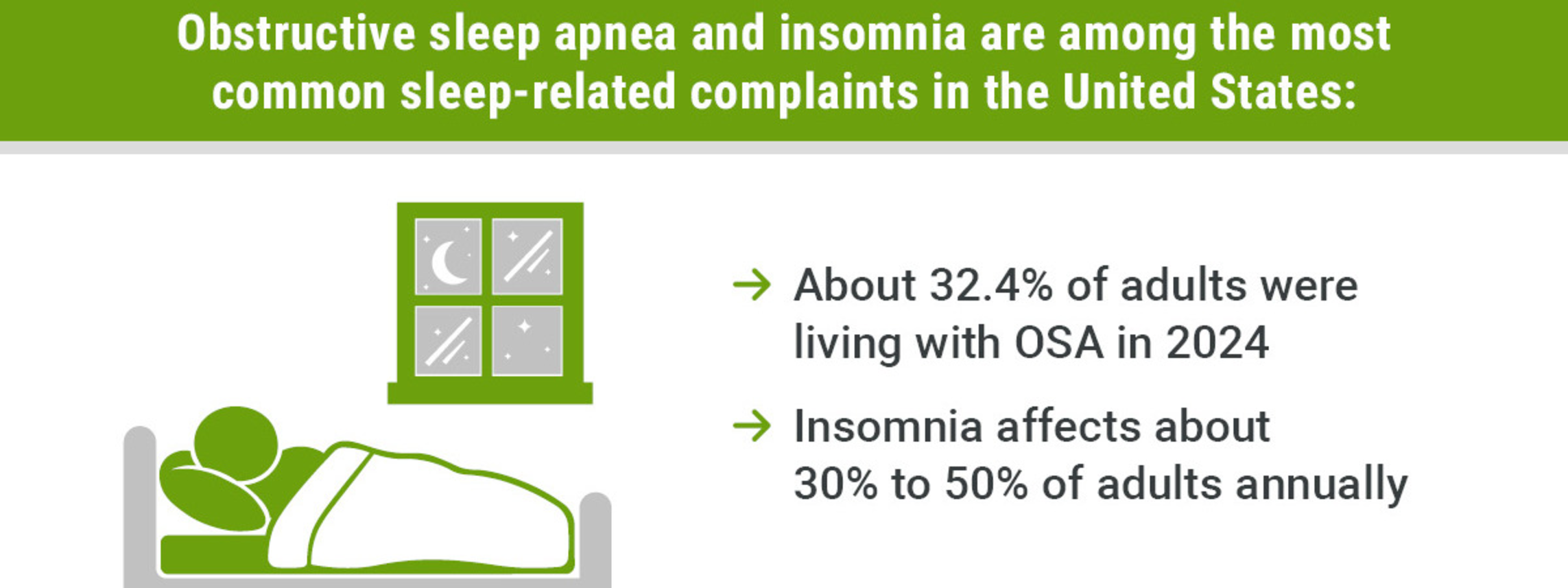
Sharkey: A systematic review published in 2025 concluded that 83.7 million U.S. adults ages 20 years or older are living with OSA, which is a staggering 32.4% of the population. Rates are higher among men (60%) than women (40%) and higher among those with obesity. I tell my patients that sleep apnea is bad for every part of the body that has blood vessels (ie, every organ system) because OSA causes intermittent hypoxia, which injures the delicate endothelial cells that line our vasculature resulting in inflammation. OSA results in damage not only at the cellular level, but also impacts critical neurobehaviors like attention, mood regulation, concentration and cognition. Despite the high prevalence and negative health effects, an estimated 80% of people with OSA go undiagnosed or untreated.
Insomnia annually affects an estimated 30% to 50% of adults. This is defined as sustained difficulty falling and/or staying asleep. Insomnia has the opposite sex-distribution as OSA — women have about two times the rate that men do. Women also are more likely to experience insomnia in the context of hormonal changes, such as during pregnancy, the postpartum period and menopause. As with OSA, insomnia is associated with a breadth of negative health outcomes. It too often goes unrecognized and untreated. Experiencing a poor night of sleep every once in a while is common; it is problematic when the bad nights start to outnumber the good ones. Paradoxically, insomnia can then take on a life of its own because in an attempt to overcome their sleep difficulties, people often employ strategies that make things worse, such as overusing caffeine, napping to “make up” for lost sleep, or going to sleep too early at night when the body clock is not ready for nighttime sleep. The majority of people suffering with insomnia don’t ask for medical help, and even when they do, their symptoms are not fully evaluated or treated. In my experience, many patients do not want to take “sleeping pills.” At the same time, clinicians are often reluctant to prescribe them because of the risks and side effects associated with older hypnotic medication classes. The good news is that in the majority of patients, insomnia can be treated successfully with behavioral treatments, such as cognitive-behavioral therapy for insomnia or brief behavioral therapy for insomnia. These treatments are delivered virtually and online. In addition, we are seeing patients helped by new medications, such as dual receptor orexin antagonists. They appear to have a more favorable safety profile than the older hypnotics.
Read the full article on Healio here: Sleep health: Circadian rhythms and sleep disorders 101