
How to interview for leadership positions in medicine
Fact checked by Kristen Dowd
ORLANDO — Clinicians should pursue leadership roles that enable them to reshape health care systems, influence careers and improve themselves, according to a presentation at the American Thoracic Society International Conference.
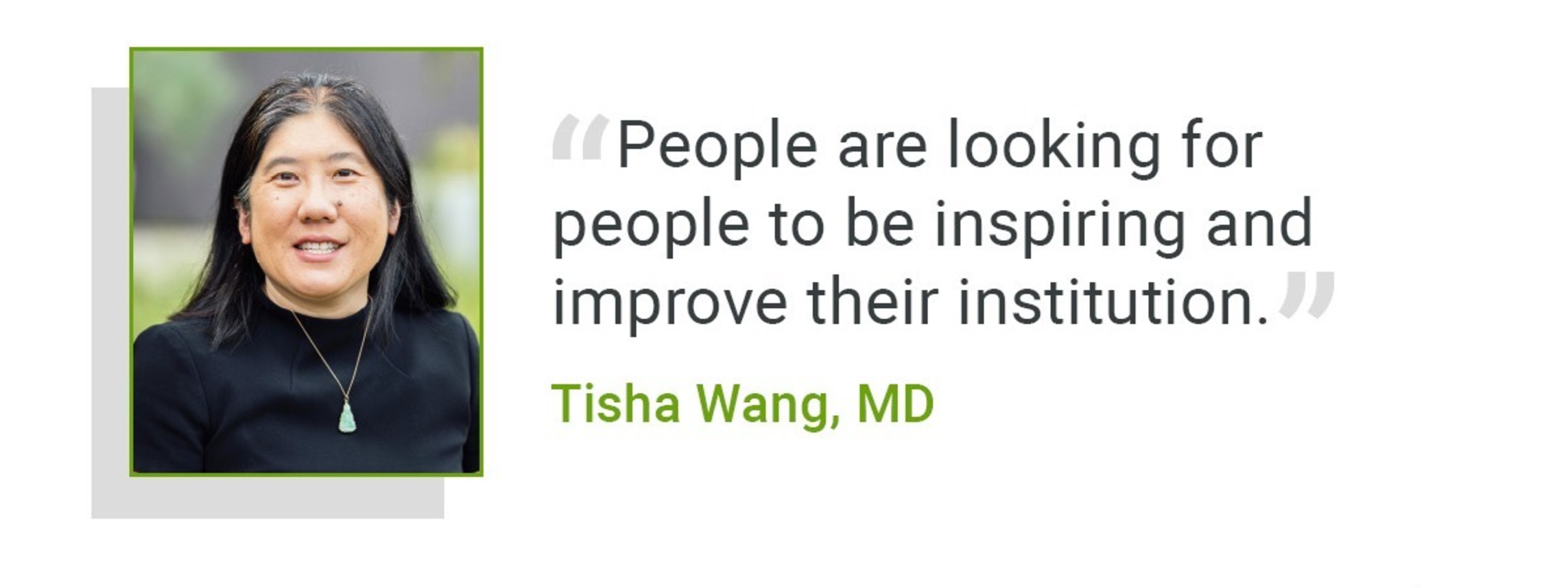
“You can be whatever it is that you want to be,” Tisha Wang, MD, said during her presentation.
But first, she added, clinicians need to land an interview — and ace it.
Do your homework
Wang — the former senior executive vice chair of the University of California at Los Angeles department of medicine and current chair of the department of medicine at the University of Washington as of June 1 — said that she tells her trainees and faculty that they always should be looking out for opportunities to advance their careers.
“The timing and/or the location may not always be perfect. You don’t need every single qualification to apply for the position,” she said.
In fact, she encourages colleagues who have every qualification to look beyond those positions, stretch themselves and apply for even bigger roles.
“You need to go to the next job,” she said. “You really need to put yourself out there.”
Timing matters in these searches, too.
“Don’t wait until you’re in a bad place, career-wise, to look for a new position, because then you’re going to settle,” Wang said. “You’re going to be pushed instead of pulled.”
When openings appear, candidates need to follow the application’s directions, such as limiting cover letters to a single page when requested.
“If they ask for a CV, update your CV. Tailor it for the position, whether it’s a business position or operations position vs. an education position,” Wang said. “And you want to make your cover letter compelling and concise.”
Multiple people should review the cover letter before it is submitted, she continued.
“A single grammatical error may actually change the way they perceive your application,” Wang said.
Candidates should do their homework before the interview as well, she added, beginning with learning about the people who will be conducting the interview and preparing specific and detailed questions to ask them.
And since interview questions tend to be very predictable, Wang said, candidates can develop responses for the most common queries.
“I’ve never had an interview where they don’t ask why you’re applying. What’s your motivation?” she said.
Other frequent topics include prior leadership positions and accomplishments, approaches to conflict and challenges, metrics for success, finance and budgets, and diversity, equity and inclusion, in addition to looking ahead.
Further subjects may include generational gaps, recruitment and retention, burnout, philanthropy, mentorship, infrastructure, and community engagement.
Read the full article here on Healio.