
‘Unlearning learned helplessness’ in medicine requires partnership of physicians, patients
By Maddy Grieco
Fact checked by Mindy Valcarcel, MS
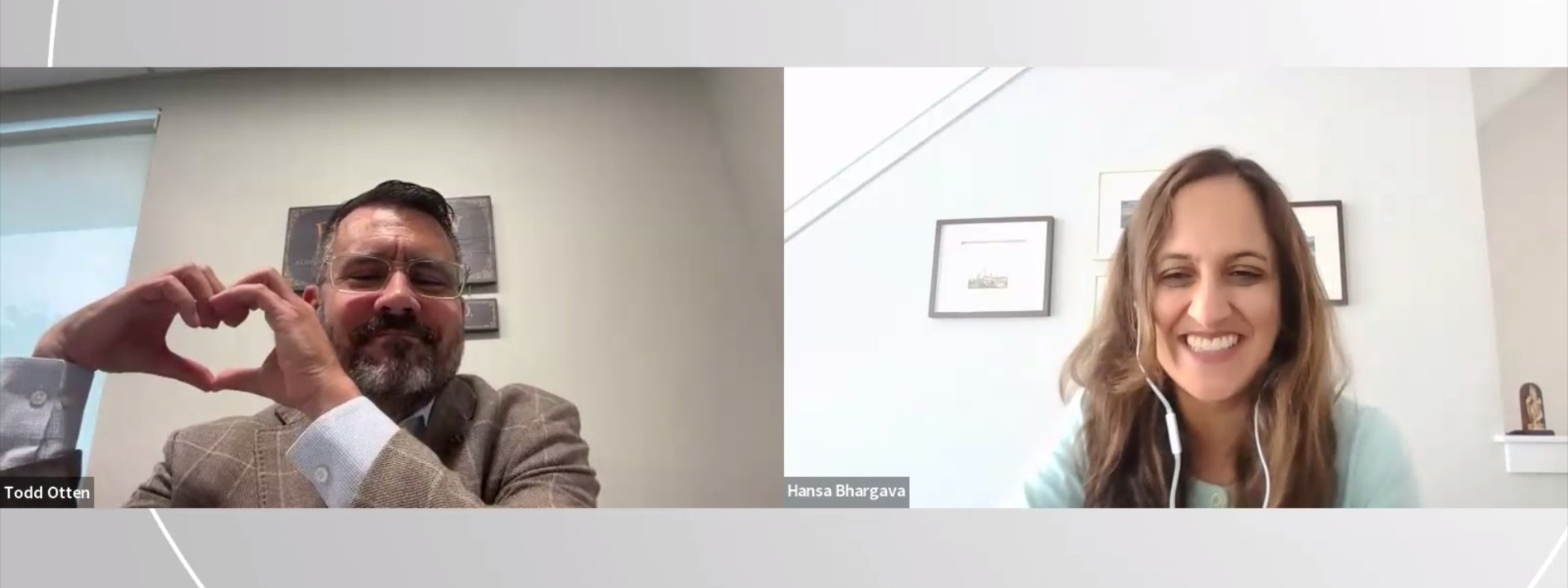
In Healio Community’s June book club, Todd R. Otten, MD, FAAP, shared the impetus behind his book, Ripple of Change, a collaborative story of physician and patient burnout caused by an impaired American health care system in need of change.
Otten, a family physician and Naval flight surgeon, coauthored this book with his patient, Joshua Judy, to encourage stakeholders to reconceptualize the system and consider the well-being of both doctors and patients.
Hansa Bhargava, MD, chief clinical strategy and innovation officer at Healio, emphasized the book’s timely relevance.
“So many of us actually have experienced burnout, and especially after the pandemic, we’ve seen a significant rise,” she said in the webinar.
‘Medicine is a world of gray’
The dialogue revealed the existing issues within the health care industry, specifically how the needs of health care professionals (HCPs) are overshadowed.
Otten read from his poem, “Medicine is a World of Gray,” which is also included in the book and describes the disheartening changes he has seen over the 20 years he has been practicing in the field of medicine.
“Does data make the dying feel better? ... I question if I am truly making a difference. How many burned-out providers does it take? Will this crisis in medicine end? Perhaps when the health care leaders actually hear the voices of physicians and patients, and listen. Too often, issues in health care are assumed to be black and white,” Otten read.
Physicians are trained “to compartmentalize and be more resilient,” Otten said, even when it comes at the expense of their own well-being. He says this is because the health care system has become reliant on monetary interests, which can result in a succession of issues for the patient and the HCP.
Bhargava agreed, saying that “the most significant flaw in the system” is that monetary outcomes appear to be more important than health outcomes.
“Twenty-five percent of hospital stays have adverse events,” Bhargava said. “[There is a] 50% error rate of medication reconciliation [and] 832,000 delayed diagnoses per year. ... I think we’ve lost sight of our goals.”
Otten said that HCPs are personally disillusioned, as well, which compounds the sacrifices they make and results in what he calls “learned helplessness.”
“We’ve got this moral injury where people are being asked to make moral decisions that are against their values ... from higher authorities. And when that happens repetitively and over and over and over again, it wears on people,” he said.
This notion of “learned helplessness” has created “zombie doctors,” Otten said.
“People are just walking through the day with blinders on, just trying to survive,” he said, adding that critical consequences may arise from the lack of individualized support in health care, including clinician suicide.
Writing for change
When Otten recognized a need for change, he turned to writing to inform a larger audience of health care consumers about the effects of burnout. He advocated for a personal and interactive approach to transforming health care.
“We need to get patients involved at scale, and we need to learn how to work together,” he said.
Through his partnership with Judge, Otten expanded the Quadruple Aim approach — an idea that adds tackling physician burnout to the medical field’s traditional “triple aim,” developed in 2014 by Thomas Bodenheimer, MD, MPH, and Christine Sinski, MD — by adding the word “Our” to the concept. His reimagined Our Quadruple Aim alters the conventional health care institution and elevates both HCPs and patients and their overall well-being.
“We need more clinicians, whether it’s nurses, whether it’s physicians, whether it’s [advanced practice providers] ... to be involved in leadership positions and understand what it’s like and how decisions actually impact care at the bedside,” he said.
In conjunction with Ripple of Change, Otten produced a short film titled “Suck It Up, Buttercup: Trust and Betrayal — Healthcare in America,” which similarly reveals issues in the health care industry. The film includes different voices, including physician perspectives, that draw attention to undetected problems that are driven by greed, he said.
Read the rest of the article on Healio or watch the full recording on-demand here.