

Physicians under pressure in name, image and likeness era
by Hunter Firment
Key takeaways:
- Name, image and likeness policies have professionalized amateur athletics.
- Physicians have concerns regarding the risks that both themselves and their patients may encounter.
The ruling of the United States Supreme Court in National Collegiate Athletic Association v. Alston, 2021, paved the way for collegiate athletes to monetize their name, image and likeness.
Since then, the professionalization of amateur athletics has evolved rapidly, with name, image and likeness (NIL) policies expanding to apply to high school athletes in states where it has been legalized. However, many physicians fear the rapid, unregulated growth of NIL may put physicians and amateur athletes at risk.
“If done the right way, NIL can be very good,” Eric McCarty, MD, chief of sports medicine and shoulder surgery at the University of Colorado School of Medicine and head team physician at the University of Colorado, told Healio. “But right now, it is out of hand and continues to take turns and courses that put a lot of entities and people in an uncomfortable position.”
New considerations
When treating an athlete with NIL opportunities, Robin V. West, MD, president of the Inova MSK Service Line and team physician for the Washington Nationals, said there are new considerations for both the athlete and the physician.
“As a surgeon, the shift is that these athletes are viewing their bodies from more than just the medical or injured aspect but looking at them as business assets,” West, a Healio | Orthopedics Today Editorial Board Member, said.
Because of that shift, Brian D. Anderson, JD, partner and global head of the sports industry team at the international law firm Sheppard Mullin, said physicians need to recognize that high school or collegiate athletes with NIL opportunities should be treated like professional athletes.
“It does not change the underlying diagnosis and medical advice, but it is more about appreciating the stakes and the pressures that are involved,” Anderson told Healio.
The addition of high school athletics to the NIL landscape poses its own set of unique challenges, according to West.
“This is a different kind of liability because now they have these high school athletes who potentially could earn $8 million a year,” West told Healio. “But if they tear their ACL their senior year and you reconstruct it and they do not get back to play, then all of a sudden are you then bound to that $8 million a year that he potentially could have made?”
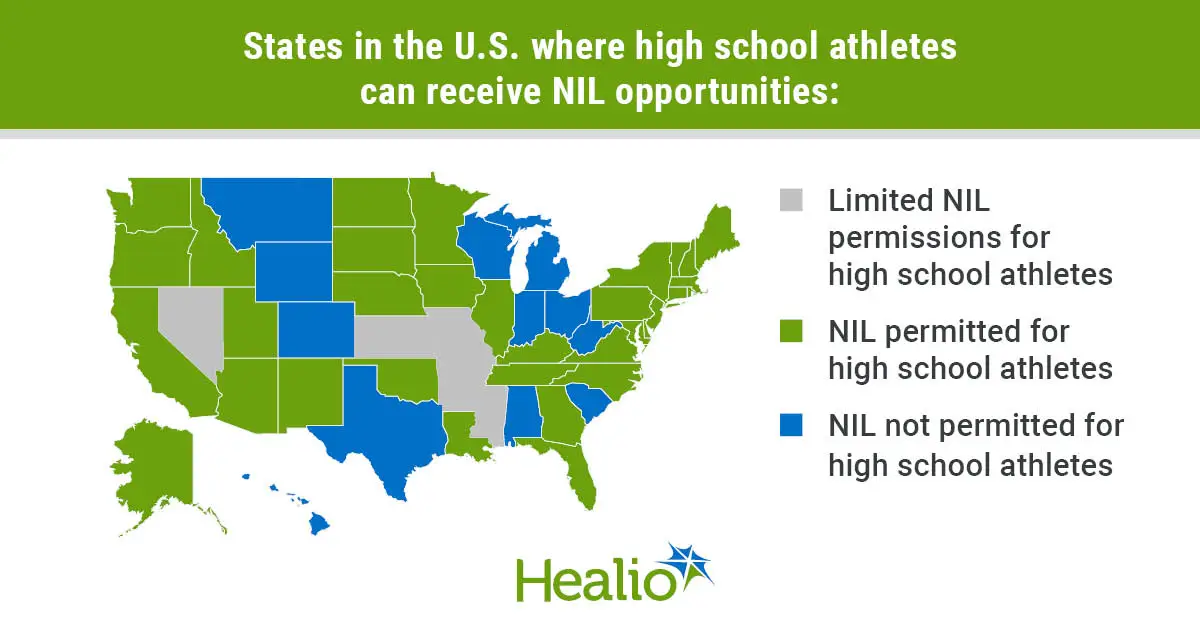
Anderson also said high school or collegiate athletes with NIL opportunities may have NIL representatives, agents, accountants and parents involved in their careers and wanting a say in the decision-making process. To navigate the pressures that external stakeholders may place on athletes, Anderson recommends athletes have adequate legal representation and emphasized the importance of involving family, guardians and loved ones to help look out for the best interested of the young athlete and provide crucial support.
“I would recommend having a lawyer and a trusted advisor to help navigate [NIL] issues,” Anderson said. “There are a lot of intermediaries involved that may not have [the athlete’s] best interests in mind. At the high school level, most of these athletes are not legally allowed to sign a binding contract. The parents need to be involved and sign the contract as well to make sure it is enforceable.”
Mental demands
In addition to the physical demands athletes may already experience from performing on the field, NIL has introduced an increased mental burden as well, according to Alex B. Diamond, DO, MPH, FAAP, FAMSSM, professor of orthopedic surgery, pediatrics and neurological surgery at Vanderbilt University Medical Center and team physician for Vanderbilt University.
“It is that dual threat of they are just regular people like the rest of us, and they go through the same things we do, but they also have this entirely separate world that is complex and intense and public that can affect their health and well-being,” Diamond told Healio. “NIL only acts to amplify all of those things.”
He said student athletes from disadvantaged backgrounds may even become “breadwinners” for their families in the NIL era, which can pose additional pressure to provide at such a young age.
The sense of a student athlete’s self-worth may also be tested by the pressures of NIL contracts and opportunities, according to Peter J. Millett, MD, MSc, orthopedic surgeon and partner at The Steadman Clinic in Colorado. Because athletes may associate self-worth with performance, he told Healio an athlete may begin questioning their self-worth after an injury that may prevent them from playing.
“Sometimes there is a level of grief that sets in, an imposter syndrome type situation where they start to feel like maybe they were not as good as they thought they were, or they did not reach their potential because of this injury,” Millett, a Healio | Orthopedics Today Editorial Board Member, said.